
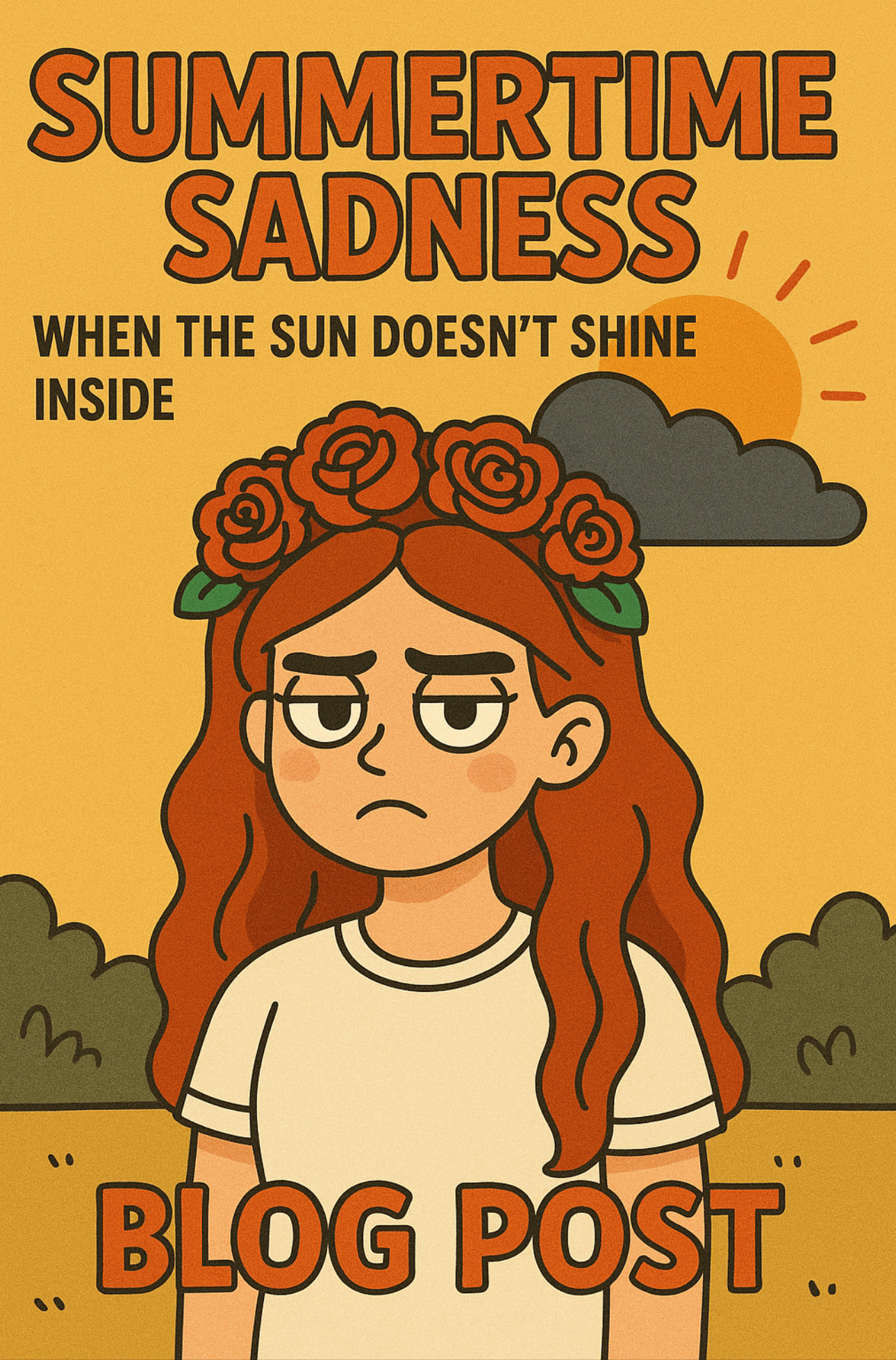
“Everyone’s out living their best life… so why do I feel like I just want to hide?”
For most people, summer is thought of as the “happy season.” School’s out. The sun is shining. Vacations, beach trips, ice cream cones, and late sunsets paint the perfect picture of joy and relaxation.
But here’s something not enough people talk about: Summer isn’t easy for everyone. In fact, for some people, it’s the hardest time of year.
If you find yourself feeling down, anxious, overwhelmed, or just not like yourself in the summer months, you might be experiencing something called summer-pattern Seasonal Affective Disorder (SAD)—or what some people call summertime sadness.
🌡️ What Is Summer Seasonal Affective Disorder?
When people hear “Seasonal Affective Disorder,” they usually picture someone curled up under a blanket during the gray winter months, feeling sluggish or down due to lack of sunlight. And that’s true for a lot of people.
But here’s the lesser-known truth: SAD can also strike in the summer.
It’s rarer than winter SAD, but very real. And because it’s less understood—and happens during a time when everyone expects you to be happy—it can be even more isolating.
Summer-pattern SAD usually starts in late spring or early summer and can last until early fall.
😞 Signs You Might Be Experiencing Summertime SAD
It doesn’t look exactly like the winter version. People with summer SAD often experience:
- Difficulty sleeping (insomnia)
- Loss of appetite or unexpected weight loss
- Irritability, restlessness, or agitation
- Feeling disconnected or withdrawn even during social activities
- Racing thoughts or anxiety that won’t shut off
- Feeling sad, hopeless, or overwhelmed without a clear reason
- Avoidance of bright light or heat
You might also feel confused—“Shouldn’t I be happy right now?”—which only adds to the emotional load.
🤯 Why Does Summer Make Some People Feel Worse?
Summer might look like paradise, but several factors can turn it into an emotional landmine. Here are a few:
1. Disrupted Sleep and Overheating
Longer daylight hours can throw off your body’s internal clock, making it harder to fall asleep. Add in hot nights and heat waves, and you’ve got a recipe for exhaustion and irritability.
2. Pressure to Be Happy
Summer is marketed as the “fun” season. If you’re not feeling joyful 24/7, it can lead to guilt and comparison. Social media doesn’t help—scrolling through endless beach selfies and glowing vacation pics can feel like salt in the wound.
3. Social Changes and Loneliness
For students, summer might mean time away from friends or routine. For adults, vacations can disrupt normal social patterns or create financial and logistical stress. Sometimes, those long stretches of unstructured time can make you feel more isolated.
4. Body Image Triggers
Warmer weather means less clothing and more visibility. For those struggling with body image or eating concerns, summer can intensify anxiety and self-consciousness.
5. Biological and Environmental Factors
Some researchers believe that heat sensitivity, hormone changes (like serotonin or melatonin), and genetic vulnerability can all play a role in summer-pattern SAD.
🧠 You’re Not Making It Up—and You’re Not Alone
If any of this sounds familiar, take a breath. You are not overreacting, lazy, or “ruining the fun.”
You might just need a little more support—and that’s okay.
🛠️ How to Cope with Summertime SAD
There’s no one-size-fits-all fix, but here are some tools and tips that can help:
🧊 1. Create a Cool, Comfortable Environment
Overheating can be a major stressor. Use fans, blackout curtains, AC if available, and cold drinks to keep your body temperature comfortable. Avoid strenuous activity in the heat of the day.
⏰ 2. Stick to a Routine
Even when summer feels unstructured, try to wake, eat, and sleep on a consistent schedule. This helps stabilize your mood and keeps your circadian rhythm in check.
📵 3. Unplug From the Pressure
Limit time on social media if it leads to comparison or FOMO (fear of missing out). Remember, people post highlights—not the whole picture. Your timeline is not a mental health metric.
🙅♀️ 4. Set Boundaries With Plans
It’s okay to say no. You don’t have to attend every cookout, concert, or family event. Protect your peace and rest when you need to.
🧘♀️ 5. Try Mind-Body Tools
Things like meditation, deep breathing, gentle movement, journaling, and mindful walks in shaded or cooler areas can help regulate emotions and lower anxiety.
🤝 6. Reach Out for Support
Talking to a therapist can be a game-changer. They can help you explore what you’re feeling, develop coping strategies, and remind you that you don’t have to go through this alone.
💬 Real Talk: It’s Okay to Not Love Summer
Summer isn’t always easy. And it’s okay if your version of summertime doesn’t match the ones you see on Instagram or in commercials.
Whether you’re quietly struggling or deeply overwhelmed, your emotions are valid. You deserve care, not judgment.
🌻 Need Support? We’re Here to Help.
If you’re experiencing symptoms of summertime sadness, therapy can help you find balance, calm, and connection—no matter the season.
Reach out today to schedule a session—and take the first step toward feeling like yourself again.
💛 Because sometimes, even in the brightest season… it’s okay to admit you need a little light inside.
Written by Sophie Limbourg