
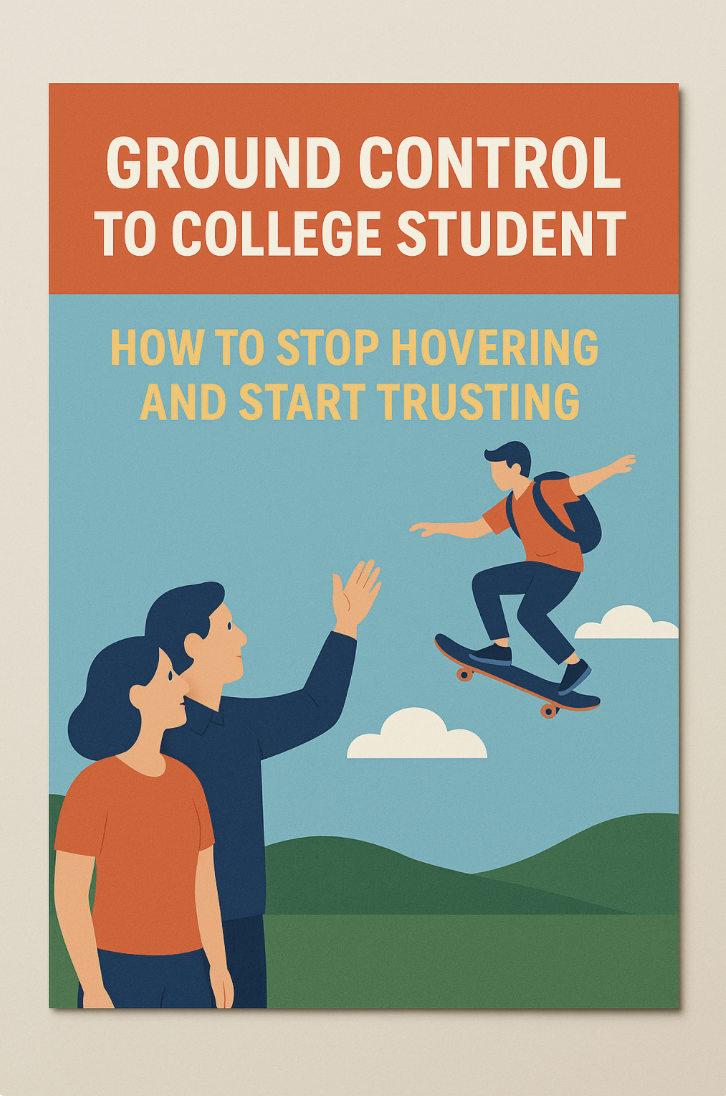
You’ve spent years making sure your child had everything they needed—rides to school, packed lunches, reminders about homework, late-night pep talks. You were their protector, problem-solver, and cheerleader rolled into one.
Now, the car is packed, the dorm room is decorated, and they’re waving goodbye. You smile, but inside? You feel the tug of What now?
For many parents, this is the moment the urge to hover kicks into overdrive. The world feels bigger and scarier when your child is out of reach. You want to call, text, check their grades online, maybe even track their location. It’s completely normal to want to stay connected—but there’s a line between connection and control.
And here’s the truth: letting go (without disappearing) is one of the best gifts you can give your child—and yourself.
Why Do Parents Hover? 🔎
Helicopter parenting doesn’t happen because you’re a bad parent. In fact, it’s usually the opposite—you care deeply. But as your child heads to college, several forces come into play:
- Fear of the unknown: You can’t predict or control what happens on campus, and that feels scary.
- Shifting identity: For years, “parent” has been your main role. Now that role is changing, and that can feel unsettling.
- Love mixed with worry: You want to protect them from pain, mistakes, and failure.
These feelings are natural. But here’s the challenge: acting on them by hovering can create the very problems you’re trying to prevent.
The Hidden Cost of Helicopter Parenting 🚁
Staying involved is healthy—being overly involved is not. When parents hover, it can have unintended consequences:
- Your child feels less capable
Constant intervention sends a message: I don’t trust you to handle this. That can chip away at confidence. - Their anxiety goes up, not down
Believe it or not, frequent check-ins can make your child feel pressured and stressed instead of supported. - The relationship can suffer
What starts as “I’m just checking in” can feel like micromanagement. Over time, that can lead to distance, resentment, or frustration.
Why Letting Go Is a Win-Win 🥇
When you give your child space, you’re not abandoning them—you’re empowering them. And that shift benefits both of you.
For Your Child
- Independence: They learn to navigate life without a safety net.
- Problem-solving skills: They figure out how to handle challenges—skills they’ll need for adulthood.
- Confidence: Each decision they make successfully builds trust in themselves.
For You
- Less stress: You’re no longer managing every detail of someone else’s life.
- A chance to rediscover yourself: Maybe there’s a hobby you’ve missed, a trip you’ve wanted to take, or a passion you’ve put on hold.
- Stronger connection: When communication isn’t constant, it becomes more meaningful. Instead of How was class today? you’ll hear, I can’t wait to tell you about this thing that happened…
How to Stop Helicopter Parenting Without Disappearing ✨
Letting go doesn’t mean cutting ties. It means creating healthy boundaries and trusting the work you’ve done as a parent. Here are practical ways to start:
1. Set Expectations Together
Talk about how often you’ll communicate. Maybe it’s a text everyday and a longer call on Sundays, or a call everyday and check-ins throughout the week, whatever works for you both. Having a plan prevents panic—and arguments.
2. Replace Control with Curiosity
When your child calls with a problem, resist the urge to jump into fix-it mode. Instead of saying, “Here’s what you should do,” try:
“What options are you considering?”
This helps them build problem-solving muscles and reminds them you trust their judgment.
3. Manage Your Own Anxiety
When the urge to text strikes, pause and ask yourself:
- Is this about their need or my need?
If it’s about easing your own worry, take a deep breath or distract yourself before hitting send.
4. Celebrate Their Growth
When they handle something independently—even something small—acknowledge it.
“You figured that out on your own! That’s awesome.”
5. Build Your Next Chapter
This season is about your growth too. Think about what excites you outside of parenting. Maybe it’s joining a club, starting a fitness routine, or planning a trip you’ve been dreaming about.
The Big Picture: Love That Lets Go ❤️
Letting go is one of the hardest things parents do—but it’s also one of the most loving. College is your child’s chance to step into independence, and your chance to step into a new chapter of life.
When you stop hovering, you’re not giving up on your child. You’re giving them—and yourself—the freedom to grow.