
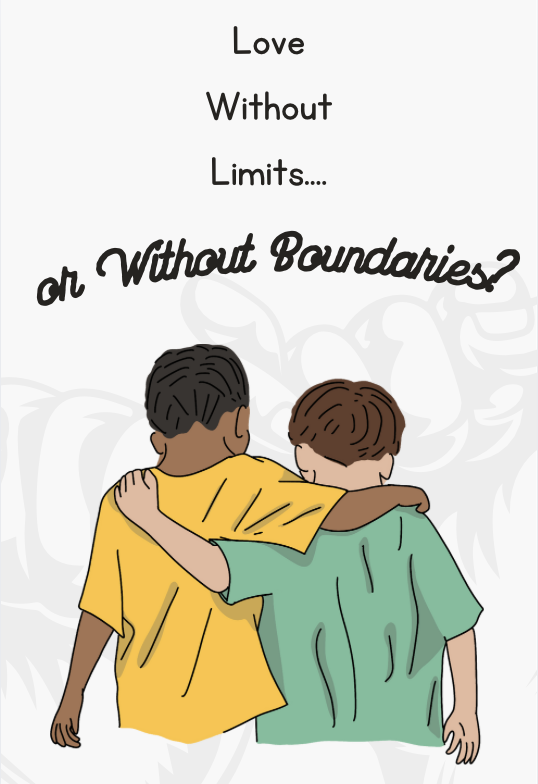
When Love Turns Into Control: Navigating Boundaries in Friendships
Friendship is one of the most meaningful parts of our lives. Our friends are often the people we turn to first—for advice, comfort, and validation. But sometimes, that closeness can blur into something less healthy: over-involvement in each other’s paths.
Love is often talked about as something soft, patient, and freeing. But there’s another side to love that doesn’t get discussed as much—the part where caring deeply for someone slowly turns into trying to shape their choices.
It doesn’t usually start in a harmful way. In fact, it often begins with the best intentions. You want someone to be happy. You want them to succeed, to feel safe, to avoid pain. You see their potential, and you want them to live up to it.
But somewhere along the way, love can shift. Instead of supporting who someone is, we begin trying to influence who they become.
When Love Becomes Direction
You might recognize this feeling:
- Wanting someone to make “better” decisions
- Feeling frustrated when they don’t take your advice
- Thinking you know what’s best for them
- Trying to guide their life in subtle (or not-so-subtle) ways
This doesn’t always look like obvious control. Sometimes it’s gentle nudging, repeated suggestions, or emotional reactions when they don’t follow your lead.
It can sound like:
- “I just want what’s best for you.”
- “I know you, and this isn’t a good choice.”
- “If you would just listen…”
Underneath all of this is often a powerful belief: If I love them enough, I can help them choose differently.
Loving Someone So Much You Lose Them
Sometimes, over-involvement comes from a deep emotional place. You care so much about someone that you want to protect them from pain—or even protect them from themselves.
But here’s the hard truth: you cannot love someone into becoming who you think they should be.
When we try to influence someone’s choices too heavily, we stop seeing them as their own person. Instead, we start relating to them as a project, a responsibility, or even an extension of ourselves.
This can create an unspoken pressure:
- “If I love them enough, they’ll make better choices.”
- “If I guide them, they won’t get hurt.”
- “If I stay involved, I can prevent things from going wrong.”
But love doesn’t work that way. Growth, insight, and decision-making are deeply personal processes. No amount of external love can replace someone’s internal readiness.
The Illusion of Responsibility
A common underlying belief is: “It’s my job to help them get this right.”
This belief can come from good intentions, but it places an unrealistic burden on the friendship. It can also lead to resentment when your efforts don’t “work.”
It’s important to remember:
- Your friend’s relationship is not your responsibility
- Their choices are theirs to make—even if you disagree
- Mistakes are often necessary for growth
Letting go of this sense of responsibility doesn’t mean you don’t care. It means you respect their autonomy.
Why We Get So Involved
Over-involvement often says as much about us as it does about the situation.
You might find yourself overly invested if:
- You have a strong desire to protect others
- You struggle with uncertainty or lack of control
- You’ve experienced similar situations and want to “help them avoid it”
- Your identity is tied to being the “supportive” or “wise” friend
In some cases, focusing on someone else’s relationship can even be a way to avoid looking at our own emotional needs or challenges.
Healthy Support vs. Over-Involvement
So what does healthy support actually look like?
Healthy support:
- Listening without immediately offering solutions
- Asking, “Do you want advice, or do you just want me to listen?”
- Trusting your friend to make their own decisions
- Offering perspective without pressure
Over-involvement:
- Repeatedly pushing your opinion
- Feeling emotionally entangled in their relationship
- Taking their decisions personally
- Trying to influence outcomes
The difference often comes down to respect—respect for boundaries, individuality, and emotional independence.
Creating Space for Real Love
Real love—whether in friendships or romantic relationships—requires space.
It means:
- Allowing people to be who they are
- Letting them learn from their own experiences
- Accepting that you can’t control their path
This kind of love can feel uncomfortable at first, especially if you’re used to being highly involved. It requires trust—trust that the other person is capable, and trust that your relationship can withstand differences.
If You’re on the Receiving End
If you feel like a friend is too involved in your life, it’s okay to set boundaries.
You might say:
- “I really value your perspective, but I need to figure this out on my own.”
- “Can I just vent without advice right now?”
- “I’ll come to you if I need guidance.”
Healthy friendships can handle these conversations. In fact, they often grow stronger because of them.
Letting Love Be What It Is
At its core, love is not about control—it’s about connection.
When we let go of the need to manage, fix, or direct someone else’s life, we create room for something more genuine. We move from trying to shape someone into who we think they should be, to appreciating who they already are.
And in that space, both people get to grow. Freely, authentically, and on their own terms.
Written By Sophie M. Limbourg