
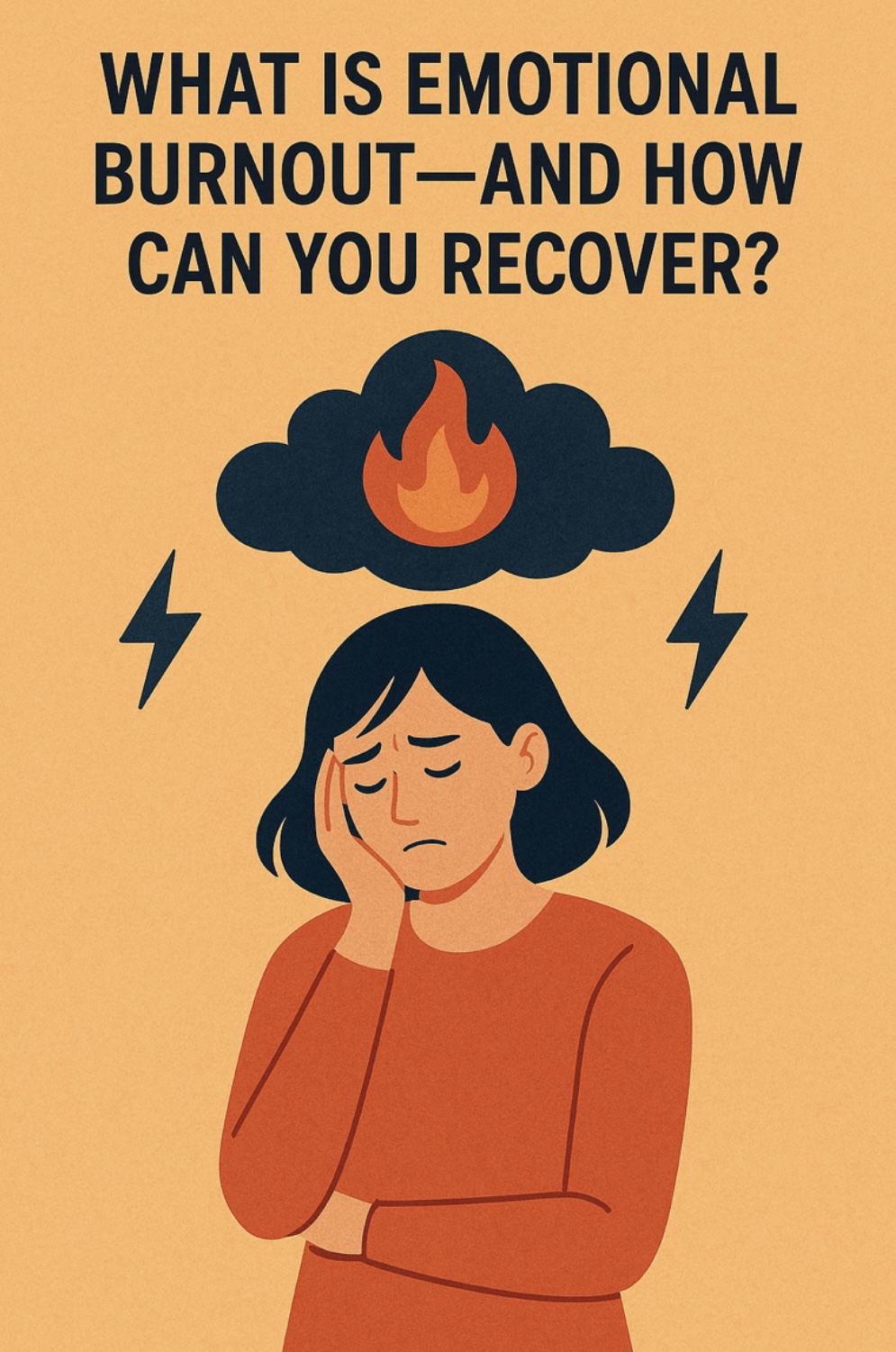
You’re snapping at everyone, even though you don’t feel angry. You’re exhausted—but no amount of sleep seems to help. You keep telling yourself to just “get through this week,” but every week feels the same. If this sounds familiar, you might be dealing with emotional burnout—and you’re not alone.
In a culture that often glorifies hustle, it’s easy to miss the signs of deep emotional fatigue until you’re running on empty. But emotional burnout isn’t just being “tired.” It’s a full-body signal that something has to change.
🌪️ What Is Emotional Burnout?
Emotional burnout is a state of mental, emotional, and often physical exhaustion caused by prolonged stress—especially in situations that demand sustained emotional labor. While it’s often associated with high-pressure jobs (like healthcare, teaching, or caregiving), burnout can stem from any overwhelming situation: parenting, relationship strain, unresolved trauma, or even perfectionism.
Common signs of emotional burnout include:
- Chronic fatigue, even after rest
- Feeling numb, detached, or emotionally “flat”
- Increased irritability or emotional outbursts
- Cynicism or hopelessness
- Difficulty concentrating or making decisions
- Physical symptoms like headaches, insomnia, or chest tightness
Sound familiar? You’re not broken—you’re overwhelmed.
🧠 The Psychology Behind Burnout
Your brain isn’t built for constant threat mode. When stress becomes chronic, your nervous system stays stuck in “fight or flight.” Emotional burnout is your body’s way of hitting the brakes, forcing you to pay attention. It’s not weakness—it’s wisdom. And that means recovery is not just possible, but necessary.
🛠️ How Can You Recover from Emotional Burnout?
1. Name It
Burnout can be sneaky. Many people blame themselves for being “lazy” or “unmotivated,” when in reality, they’re exhausted beyond capacity. Acknowledging burnout is the first step toward healing.
2. Set Micro-Boundaries
You don’t need to overhaul your life overnight. Start small:
- Say no to one unnecessary commitment this week
- Limit your exposure to draining people or media
- Build in 10-minute breaks during your day—no screens allowed
3. Reconnect With Your Body
Your body holds the score when it comes to emotional stress. Practices like deep breathing, stretching, walking, yoga, or even lying still while listening to calming music can begin to reset your nervous system.
4. Nurture, Don’t “Fix”
You don’t need a 5-step productivity hack—you need compassion. Ask yourself daily: What would feel nourishing today? Not “efficient.” Not “useful.” Nourishing.
5. Talk to Someone
Burnout thrives in isolation. Whether it’s a friend, therapist, or support group, speaking your truth out loud gives it shape—and gives you relief. Therapy offers a safe space to untangle burnout’s roots and rebuild your capacity, slowly and gently.
💬 Final Thoughts
Burnout isn’t a personal failure—it’s a natural response to chronic overwhelm. And recovery isn’t about going back to who you were before burnout. It’s about becoming someone more attuned to your limits, more protective of your energy, and more rooted in what matters most.
You don’t have to do it alone. Healing is possible—and you’re already on your way.
Written by Sophie Limbourg