
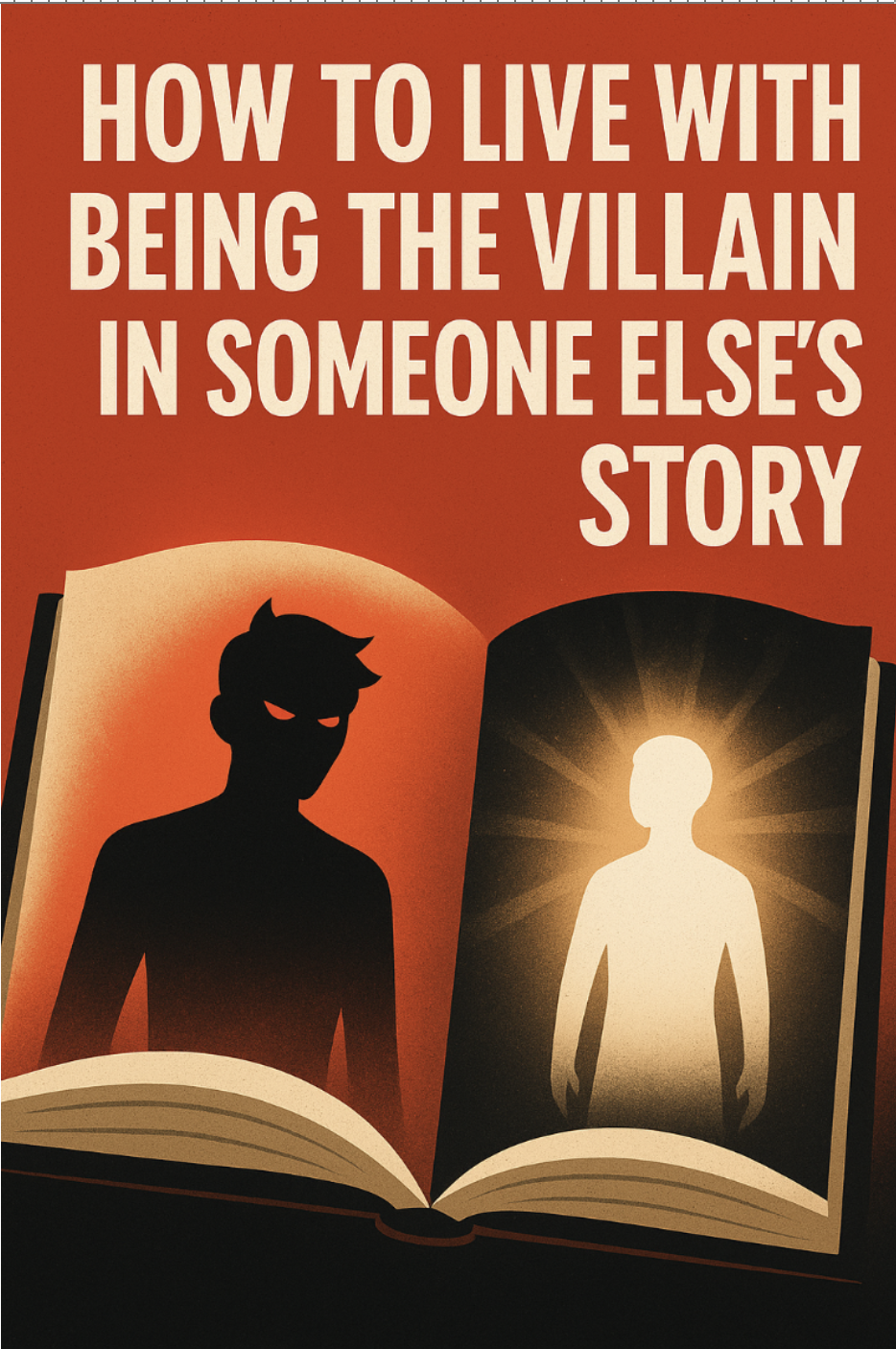
We all want to be the hero in our story—and ideally, in the stories of others. But life, in its complexity, doesn’t always grant us that role. Sometimes, through misunderstandings, mistakes, or even necessary choices, we become the villain in someone else’s narrative.
It can be painful to realize that, despite your intentions, you’ve hurt someone. Maybe you ended a relationship, made a decision they couldn’t understand, or responded from a place of fear or defensiveness. Regardless of the context, the emotional weight of being misunderstood or resented can be heavy.
So how do you make peace with this role? How do you sit with the knowledge that you may be seen as the bad guy—and still move forward with self-awareness and integrity?
Let’s explore.
1. Understand the Nature of Perspective
Everyone sees the world through their own emotional lens. That means your actions may be interpreted in vastly different ways depending on the experiences, fears, and needs of the people around you.
Being someone’s “villain” doesn’t necessarily mean you acted with malice. It often means your actions didn’t align with their expectations or emotional needs. Understanding this isn’t about deflecting responsibility—it’s about realizing that stories are complex and multi-layered.
2. Take Honest Accountability—Without Shame
There’s a difference between guilt and shame. Guilt says, “I did something wrong.” Shame says, “I am something wrong.”
Healthy accountability involves reflecting on your actions with compassion for yourself and others. Ask yourself:
- Did I act from fear, insecurity, or pain?
- Did I fail to communicate clearly or respectfully?
- Was I protecting a boundary that needed to be held?
Acknowledge the impact, even if it wasn’t your intention. Taking responsibility is empowering—it gives you the tools to grow.
3. Let Go of the Need to Be Fully Understood
One of the hardest things to accept is that not everyone will see your heart. Not everyone will be ready—or willing—to hear your side. Trying to defend yourself over and over can keep you trapped in emotional loops.
You can’t control how someone else sees you. What you can control is how you respond, how you learn, and how you choose to live moving forward.
Letting go of the need to be redeemed in someone else’s eyes is an act of emotional maturity—and freedom.
4. Remember: Villains Are Human Too
In many stories, the villain is simply someone with unmet needs, unhealed wounds, or impossible choices. When we reduce people to “good” or “bad,” we lose the nuance that makes healing possible.
You are not defined by a single chapter of your life.
Extend compassion to the version of yourself who made difficult or messy choices. That person was doing the best they could with what they knew and felt at the time.
5. Use This as an Opportunity for Growth
Being the villain in someone’s story can be a profound wake-up call. Instead of collapsing into shame or self-blame, ask: What is this experience teaching me?
- Do I need to improve how I communicate?
- Are there patterns in my relationships that need healing?
- Can I offer an apology, even if it won’t be accepted?
This kind of reflection can lead to deeper empathy, stronger boundaries, and more conscious decision-making in the future.
6. Seek Support If Needed
Unresolved guilt, shame, or grief can weigh heavily on your emotional health. Therapy offers a safe space to explore these feelings, make sense of your experiences, and reconnect with a grounded sense of self.
You don’t have to carry this alone.
In Closing
It’s deeply uncomfortable to be cast as the villain. But it can also be an invitation—to accept your humanity, to grow from your imperfections, and to move forward with integrity and compassion.
You can’t always change the way others see you. But you can decide who you choose to become next.
And that choice? That’s where your true power lies.
Written by Sophie M. Limbourg
If you’re navigating the aftermath of a difficult relationship or decision and need a supportive space to process it, we’re here for you. Reach out to us to schedule a session with our licensed therapist.